U.S. Fish and Wildlife Service
Secret InvasionThe U.S. Fish and Wildlife Service is the federal agency most consistently associated with investigating the sliggers and limiting the ecological damage of their spread. Its role joins biological research to field response: it gathers evidence about the creatures and their origins, alerts other authorities as the threat widens, and advises search teams on how to destroy animals and eggs without returning dangerous material to the food chain. The Service does not appear as a single command directing every operation; its work depends on scientists, mobile teams, and cooperation with state and military forces.
Scientific Investigation
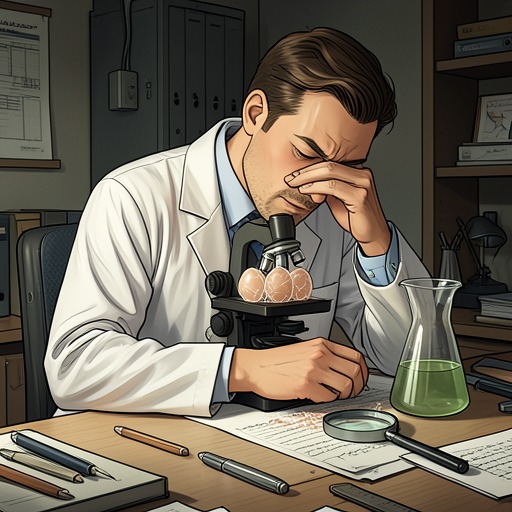
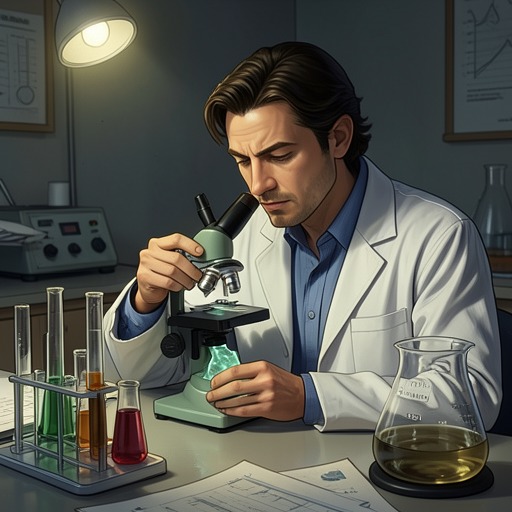
After the battle at Wrecker Island, Denise Baddington, a marine biologist stationed in Sweetboro by the Service, had dead specimens and samples of the tainted water in which the creatures lived. Those materials offered a chance to investigate both the leak from the Wrecker Island Nazi U-boat and the process by which the creatures had acquired their extraordinary traits. At this point, the evidence had not yet yielded definitive answers: the hoped-for analysis remained a question of what the leaking substance was and how it had altered the animals.
Denise later explained that her tissue analysis had not conclusively identified the creatures. She was still awaiting results from residue samples recovered from the submarine. Her working theory was that the unknown substance had been engineered to induce genetic mutation when introduced into an organism’s DNA. The creatures’ mixed marine characteristics, she proposed, could reflect successive generations consuming other species and absorbing parts of their prey’s genetic material. Ron Tully considered the theory plausible in light of Nazi biological-warfare experiments, but the account distinguishes their explanation from a confirmed laboratory finding.
The investigation also had to account for reproduction. Denise connected the possibility of parthenogenesis to species known to reproduce asexually, including sharks, crayfish, frogs, whiptails, and Komodo dragons, suggesting that the sliggers might have acquired this capacity through consumption and genetic absorption. The practical implication was urgent: Josh Moody warned that creatures able to reproduce almost as fast as they grew could multiply beyond the capacity of responders to control them. Scientific inquiry therefore shaped decisions about public warnings and the scale of the response, even while important details of the biology remained uncertain.
Warning and Interagency Coordination
As reports emerged of an attack at a Georgia campground and eggs on a Florida beach in St. Augustine, Denise recognized that the distant locations could not readily be explained by a single nearby nest. She warned that multiple nests, eggs, and creatures might be dispersed along the coast, leaving communities unaware of the danger until an attack occurred. When Eaver Robinson asked whether someone could issue a national warning, Denise turned to Gina Taylor, her contact at the Service, and said she could notify the agency. Mason Parker supported making the public aware quickly, while Josh planned to alert state troopers, especially coastal branches, and proposed coordinating a sweep of the state’s shoreline.
Gina’s subsequent call brought Ron and his partner Andy into the investigation. She asked them to travel to the VA Bio+Tech Park in Richmond and join Leslie Bickers, a resident biologist, who was studying an unidentified animal found near Virginia Beach. The Service’s work thus extended beyond collecting samples in Sweetboro: it connected specialists and sites as new evidence appeared. Later, Ron and Andy met the local team in Sweetboro, and Ron identified himself as being with Fish and Wildlife. When the federal government sought to recruit the pair for a study team, Denise agreed to join as well, noting that she was already employed by the same organization.
The threat soon demanded coordination beyond scientific teams. Ron agreed that authorities should warn the public and contact law-enforcement agencies. The narrative reports that governors in Virginia, New York, South Carolina, Georgia, and Florida called in the National Guard, and that the president ordered the United States Coast Guard to become involved. These forces were not presented as subordinate parts of the Service; rather, the agency’s scientific and advisory role operated within a wider response involving state governments, federal authorities, and military personnel.
Field Advice and Biosecurity
The Service’s guidance addressed not only how to find the sliggers but what had to happen after they were killed. Drawing on experience with the creatures, Mason advised that nests were the priority and were most likely in dark, wet places such as shaded thickets and seaside caves, where currents would not disturb them. He cautioned that simply blowing up a nest could scatter mutated tissue into the water. If other animals ate that tissue, the contamination could continue through the food chain.
Denise made this disposal risk a central part of the response. She urged teams to recover tissue and collect and burn carcasses so scavengers could not consume remains carrying mutated DNA. Ron promised to ensure the procedure was followed. When Ron and Andy explained their role to Sheriff David Mittenfeld in Savannah, Andy described assistance with finding the animals and ensuring their proper disposal. At a later briefing with troops, Ron said the team’s primary purpose was to ensure clean disposal; Denise specified that they would help collect and burn both animals and eggs. Ron also joined the troops in the field, offering extra eyes during the search while emphasizing that the team could keep up without obstructing the operation.
These instructions were translated into operational rules. In New Orleans, a National Guard unit was told to avoid explosives, in accordance with Denise’s warning, and to watch for the creatures’ toxic appendages. The unit’s planned sweep ran from New Orleans up the Mississippi River, while other divisions advanced from Florida and Texas. Ron had recommended dividing forces in this way after coastal currents were thought to have carried the creatures east along the Gulf of Mexico: one third would go to Port Arthur, one third would continue west from Florida, and one third would move to the Mississippi. The Service contributed route and containment advice, but the military units conducted the sweeps.
Deployment and Assessment
The Service’s work could involve travel, consultation, and periods of waiting for assignments. In Cocoa Beach, Ron called the agency daily, but was told that his team had no current destination and should remain on standby. When reports later suggested the creatures were moving farther inland, the team considered the westward reports from Port Arthur and the risk posed by expansion up the Mississippi. Ron chose to take his group to Louisiana to inspect the river, judging that route to be the most concerning. The episode presents the response as a continuing effort to adjust deployments as the perceived geography of the outbreak changed.
After an Army Reserve sweep located and destroyed a nest near Baton Rouge, at the edge of the Mississippi, Ron’s team continued north with the troops. They found no further nests during the search, which reached St. Francisville; the team concluded that the spread up the river had been stopped. Ron then prepared an assessment for the U.S. Department of the Interior. He recorded the creatures’ ability to reproduce asexually, their rapid adaptation to different environments, and the clean disposal of exterminated animals so their remains would not contaminate the ecosystem. Searchers covered another forty miles of waterways without finding a monster, while reports from the Gulf Coast indicated that encounters had become less frequent. Ron judged that the remaining infestation could be eradicated in a relatively short time.
Institutional Significance
The Service’s contribution is defined by a specific tension: responders must kill a dangerous invasive animal without allowing its biological material to seed further change. Research supplies hypotheses about mutation, prey, and reproduction; field experience supplies practical rules about nests, weapons, carcasses, and eggs; coordination carries those rules into operations conducted by other agencies and armed forces. The Service’s authority in the crisis is therefore less a matter of commanding every search than of making biological knowledge consequential across jurisdictions. Its final reports also mark a change in what can be claimed: early explanations remain theories awaiting test results, while the later assessment can point to destroyed nests, miles of searched waterways, and a declining frequency of sightings.